
'No, India and China were not about to go to all-out war over a few rocks of Galwan.' 'The full picture of what went on at the highest level between two heads of State will not be known for a very, very long time and rightly so,' points out Colonel Anil A Athale, former head of the history division, ministry of defence.
From the Sensex pack, IndusInd Bank dropped over 3.50 per cent, followed by Mahindra & Mahindra which declined more than 2 per cent. HCL Tech, Maruti, Infosys, Zomato, Power Grid, Adani Ports, Tata Consultancy Services and UltraTech Cement were also among the laggards. Kotak Mahindra Bank, Hindustan Unilever, ICICI Bank, Tata Motors, Nestle and Bharti Airtel were among the gainers.

The question is no longer whether the war will expand. It has. The next few days will tell us whether the war stabilises around Hormuz or whether the Strait itself becomes the trigger for a far larger rupture. What to watch for over the next 48 hours is simple: Any move by the US toward direct naval control of the Strait; any credible Iranian attempt to disrupt or mine shipping lanes and, critically, whether energy infrastructure in the Gulf continues to be targeted.If those lines are crossed in tandem, the war will no longer be containable within the region.

Rahul Gandhi said that had an INDIA Bloc government negotiated the trade agreement with the US, it would have told US President Donald Trump that he should treat India as an equal.

From the 30-share Sensex pack, Power Grid, Tata Steel, Zomato, Titan, Bajaj Finance, Mahindra & Mahindra, NTPC and Tata Motors were among the major laggards. Kotak Mahindra Bank, Bharti Airtel, HCL Tech, Tech Mahindra, ICICI Bank and Tata Consultancy Services were the gainers.
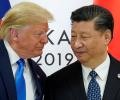
In a statement, the Chinese ministry of commerce said that it would file a lawsuit with the World Trade Organisation against the US for its "wrongful practice," the Global Times reported.

'The trade deficit in some sectors is huge and that is an area of opportunity to localise.'
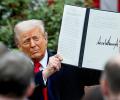
India needs another shot of difficult reform, of the kind only possible at gunpoint. Mr Trump holds that gun to our heads now. A drastic reduction in tariff protection, other elements of sarkari wet-nursing will force entrepreneurial India to become competitive again, argues Shekhar Gupta.

'Credit growth in India remains in double digits, even though corporate borrowing is subdued.' 'Corporate credit is weak because companies are cash-rich and cautious amid global uncertainty.'

Fight on toward goals that keep receding, or exit with most objectives unmet. Trump is agitated, his poll numbers falling below the Plimsoll line, his base fractured between those who back the war and those who remember that he campaigned on ending them.
The impact of Trump's announcement of increasing import tariffs will have negligible benefit for India not because of companies trying to shift from China to other countries or their supply chains being affected due to their Chinese operations but because of our faulty policies, explains Mudit Jain.
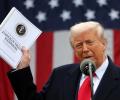
"These latest so-called 'Liberation Day' tariffs are reckless and self-destructive, inflicting financial pain on Illinois at a time when people are already struggling to keep their small businesses afloat and put food on the table."

The Budget reflects a clear focus on strengthening India's long-term prospects by leaning on nation-building sectors such as infrastructure, manufacturing, and technology while maintaining fiscal responsibility.

Finance Minister Nirmala Sitharaman's biggest challenge will be to find a new growth driver, particularly against the backdrop of a global economy ravaged by heightened uncertainty and fragmentation, financial markets on a precipice, and global commodity prices on a continued uptrend.

It is learnt that India was mulling various options relating to the project after Trump administration threatened a 25 per cent additional tariff on countries doing business with Tehran.

Technology Innovation: Sword or Plough looks at key moments in recent history, noting how key technological changes at pivotal moments had unimaginable consequences, both positive and negative. It makes for enjoyable and insightful reading.

'We believe the truth is in the middle, and that India is at an important crossroads.'
From the Sensex firms, Tata Steel, Power Grid, NTPC, Kotak Mahindra Bank, Reliance Industries and Adani Ports were among the biggest gainers. Asian Paints and Tata Consultancy Services were the only laggards.

Trade deals ease risks for Indian equities, but weak demand and stretched valuations raise questions over whether optimism -- especially in smallcaps -- can turn into a sustained bull run, points out Debashis Basu.

India and Canada are negotiating a long-term uranium supply agreement worth $2.8 billion. They are also exploring expanded civil nuclear cooperation after the passage of the SHANTI Bill.

'Only four or five original companies remain; the rest have been replaced every decade as sectors evolve or leadership shifts.' 'Companies that fail to adapt -- like many textile mills from the 1970s and shipping firms from the 1980s -- disappear.' 'Benchmark indices reward those who reinvent themselves in line with economic demands.'

Finance Minister Nirmala Sitharaman on Sunday makes history as she presents a record ninth consecutive Budget that is expected to unveil measures to sustain growth momentum, maintain fiscal discipline, and contain reforms that could buffer the economy from global trade frictions, including US tariffs.

US President Donald Trump has again credited himself for ending the conflict between India and Pakistan, asserting Norway controls the Nobel Peace Prize. He claims he deserves the honor for ending eight wars and saving millions of lives.
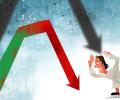
Indian equities declined on Friday, with the benchmark Nifty posting its worst weekly fall since September, as foreign investor sentiment remained weak amid tepid earnings growth and little progress on the India-US trade front.

The cost of any flight from Delhi and Mumbai could rise by up to Rs 3,000 soon unless the airport regulator is able to reverse a court order.
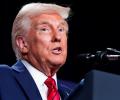
Earlier, Trump has already talked about slapping "100 per cent tariffs" on the BRICS grouping, a bloc that includes India as well.

Union Minister Nitin Gadkari states that countries engaging in bullying do so because of their economic strength and technological advancement. He emphasized the need for India to increase exports and reduce imports to achieve global leadership.

Will rising tensions between US-Israel and Iran threaten crude oil supply through the Strait of Hormuz, putting India's fuel prices, imports, and economic stability at risk?

Among major engagements in 2026 is the visit of the European Union leadership, chief guests at the Republic Day parade.

The Centre will soon announce a power tariff policy to ensure that states have a uniform approach towards fixing electricity tariff, Power Secretary R V Shahi said on Tuesday.\n\n\n\n

India is a global leader in software development services, IT enabled services, knowledge process outsourcing services and contract R&D services relating to software development, Sitharaman said noting these business segments are quite inter-connected with each other.
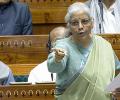
Finance Minister Nirmala Sitharaman launched a strong attack on Rahul Gandhi and the Congress party, accusing them of compromising India's interests on the world stage and selling out farmers and the poor during their time in power.

'Trump had done a deal with the current regime minus Maduro. The current regime is giving Trump entry into Venezuelan oil. They are obeying him and doing whatever he says.' 'They are happy because they have saved their heads by sacrificing only two, Maduro and his wife. Thousands of Venezuelan military leaders would have been jailed or killed in American action had Maduro stayed in power.'

India remains one of the largest and fastest-growing markets for SAP, and the scale of products being built in the country is bigger compared to other geographies, Manish Prasad, president and managing director of SAP India, said. "The beauty of India is scale, size, and agility.

As the rupee remains under pressure due to several headwinds and the uncertainty around the India-US trade deal, the Reserve Bank of India (RBI) has been stepping in only to calm volatility, not to stop the fall.
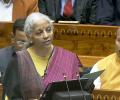
Budget 2026 sticks to fiscal discipline, shuns populist measures despite five key state elections coming up, but ends up rattling stock markets with a higher transaction tax on derivatives trading.
Moody's Ratings on Tuesday said tax cuts in the current fiscal has dented India's revenue growth, leaving less scope for fiscal policy support for the economy.
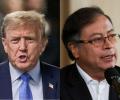
US President Donald Trump has imposed tariffs and a travel ban on Colombia after the South American nation refused to accept two American military planes deporting undocumented Colombians. The move comes after President Trump announced mass deportations of illegal immigrants and warned countries of consequences if they refuse to accept them. Colombian President Gustavo Petro, in a post on X, said that the US cannot treat Colombian migrants as criminals and denied the entry of American planes carrying Colombian migrants into Colombian territory. Trump responded by imposing a 25% tariff on all goods coming into the US, a travel ban and immediate visa revocations on Colombian government officials, and visa sanctions on all party members, family members and supporters of the Colombian government. The US also announced enhanced customs and border protection inspections of all Colombian nationals and cargo on national security grounds. In retaliation, Colombia announced a 25% import tariff on American products.

Singapore's long-ruling People's Action Party (PAP), led by Prime Minister Lawrence Wong, has secured a landslide victory in the country's general election. The PAP won 87 of 97 seats, with voters endorsing the party's focus on stability and economic security amidst global uncertainties. Wong expressed gratitude for the strong mandate and vowed to tackle concerns about the cost of living and housing. The results mark a significant win for the PAP, which has been in power since Singapore's independence in 1965.

Chinese Foreign Minister Wang Yi said that it is imperative for the two sides to view each other as partners and opportunities rather than rivals or threats, and invest their valuable resources in development and revitalisation.
